Sunday, December 01, 2013

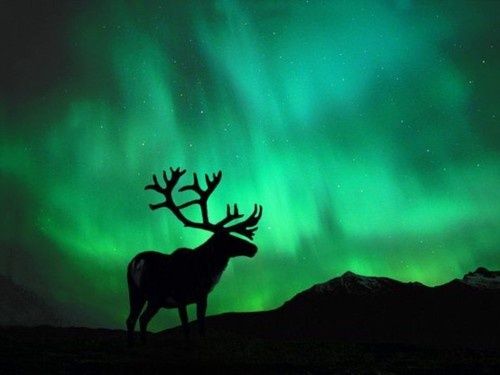
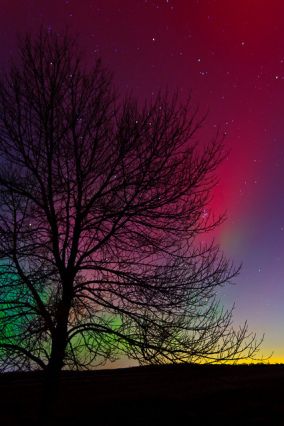
THE NORTHERN LIGHTS – SPARKED BY THE FOX?


How do the Northern Lights come about? Sami legend says the Fox runs across the Arctic fells and lights up the sky with sparks flying from its tail whirling up the snow. The modern Finnish term “revontulet”, the fox’s fires, derives from this myth.


A scientist’s explanation to the phenomenon would be something like “the solar wind sends charged particles towards the Earth, and upon colliding with its atmosphere they produce energy given off as light."


The Aurora Borealis appear on 200 nights a year in Finnish Lapland. The further north you go, the greater the chances of spotting them. Saariselkä, Kilpisjärvi and Inari along with the rest of Northern Lapland are recommendable places in Finland. In Helsinki and the south, the Aurorae can be seen on roughly 20 nights a year, away from city lights.


HOW AND WHEN DO I SPOT THEM?

Seeing the Northern Lights requires sufficient darkness and clear skies, which makes late autumn, the winter and early spring (September to March) the most favourable times. The best time of day is an hour or two before and after midnight. The display might last 20 seconds or go on for hours.


“I WAS PROMISED THE NORTHERN LIGHTS, NOW WHERE ARE THEY?”

Even with today’s technical equipment, the Lights’ appearance can never be forecast with certainty. They are a phenomenon that cannot be packaged and sold, which makes each spotting special.


They appear for you; right then, right there. The Sun and the Earth are the conductors of the show, and each performance is unique. The Fox moves in mysterious ways.


www.visitfinland.com/article/the-no...ked-by-the-fox/


Versione Italiana:


Brigid, la triplice dea celtica che divenne Santa


Altri suoi nomi: Breo Saighead, Brid, Brighid [Irlanda], Brigindo, Brigandu [Gallia], Brigan, Brigantia, Brigantis [Britannia], Bride [Alba]. Breo Saighead, o " la freccia ardente o la potenza"

È un triplice dea celtica, il figlia di Dagda e di sua moglie Bres. Brighid ha tre funzioni che sono:

1) il fuoco dell'ispirazione come patrona della poesia,
2) il fuoco del focolare, come patrona della guarigione e della fertilità
3) il fuoco della forgia, come patrona dei fabbri e delle arti marziali.


Continua su: http://inovemondi.forumfree.it/?t=66643886

Brigit, the goddess who became a Saint


Other names are: Breo Saighead, Brid, Brighid [Ireland], Brigindo, Brigandu [Gaul], Brigan, Brigantia, Brigantis [Britain], Bride [Alba, or Scotland]. Breo Saighead, or the "Fiery Arrow, or Power," is a Celtic three-fold goddess, the daughter of The Dagda, and his wife Bres. Known by many names, Brigit's three aspects are:

1. Fire of Inspiration as patroness of poetry,

2. Fire of the Hearth, as patroness of healing and fertility, and

3. Fire of the Forge, as patroness of smithcraft and martial arts.


Brigit: the manifold of a goddess through the centuries


I am She
who is the natural Mother
of all things,
Teacher and governor
of all elements,
The initial progeny of worlds,
The head of divine power,
Queen of all those who are in the underworld,
The most important one among those
living above,
Only manifestation
and under the single form
of all Gods and Goddesses.

Lucius Apuleius


Brigit can be seen as the most powerful religious form in the entire Irish history, as she is one of the most complex and contradictory goddesses of the Celtic pantheon. Many layers of separate traditions have crossed, creating her indisputably complex story, spanning many centuries. She managed to pass intact through generations, filling different roles in different periods.

She was, and still is, a Goddess with many faces: Bride, Bridey, Brighid, Brigit, Briggidda, Brigantia. There are many more variations on pronunciation; a possible one could be “Breet”.

Brigit is the traditional patroness of healers, of poetry and of smiths, all deeds of inspired and practical wisdom. Since she’s a solar divinity, her attributes are light, inspiration and all deities associated to fire. Even if she couldn’t be identified with the physical sun, she certainly is the origin of inner vital and healing energy.

Her name derives form the root “breo” (fire): forge’s fire combined with the fire of artistic inspiration and healing energy. Brigit, daughter of the Great God Dagda and Celtic counterpart to Athena/Minerva, is the keeper of tradition, since poetry represented a sacred art for the ancient Celts, transcending the simple verse composition and becoming magic, ritual, personification of the ancestral memory of populations.

The Druid mysteries of healing were also under Brigit’s aegis, which is proved by the numerous “sources of Brigit”. Widespread in the UK, some of them have kept numerous traditions to date regarding their healing qualities. Countrymen still hang, on branches of trees growing nearby, strips of fabric or ribbons indicating the illnesses from which they want to be healed.


The mirror, the goblet and the spinning wheel were sacred to Brigit. The mirror is a tool of divination and symbolises the Other World, to which heroes and initiated have access. The spinning wheel represents the centre of the Cosmos, the turn of the Wheel of the Year and also the wheel that spins the threads of our lives. The goblet represents the womb of the Goddess that gives birth to all things.

King Arthur’s sword, Excalibur, was forged by the Lady of the Lake, a figure often associated to Brigit for her role of forger and for the fire. Like the Arthurian Avalon, or Isle of Apples, Brigit has an apple orchard in the Afterworld, to which bees travelled to obtain its magical nectar.

Brigit, meaning “she who exalts herself”, is the Goddess of the sacred flame of the Kildare (from Cill Dara, meaning ‘church of the oak’) and often is considered to be the White Maiden aspect of the threefold Goddess. Gailleach, or White Lady, drank from the ancient Well of Youth at dawn: in that instant, she was transformed into her maiden aspect, the young goddess named Brigid. She was Christianised as the "foster-mother" of Jesus Christ, and called St. Brigit, the daughter of the Druid Dougal the Brown. Sometimes she is also associated with the Roman-Celtic goddess Aquae-Sulis [currently Bath, Somerset, UK].


The Cathedral Church of St. Brigid, Kildare - Ireland


St. Brigid                                                                                                                                                                                                     


One of her most ancient names is Breo Saighead, meaning “burning arrow”, name that depicts attributes of punishment and divine justice.

Three rivers have been named after her: Brigit, Braint and Brent respectively in Ireland, Wales and England. In modern Great Britain, she’s referred to as the maiden warrior Brigantia and is venerated not only as justice and authority, but also as the personification of Great Britain itself.

There is a 12th century story in which Merlin got inspired by a feminine figure representing the sovereignty of Great Britain, which history is caused by her visions. Moreover, Taliesin describes a traditional cosmology inspired by Brigantia. In many stories there is also a reference to her nurture for the development of human potential.

She is associated to the cow with reference to the festival of Imbolc. In this celebration, which is entirely dedicated to her, the light of fire, purification by well’s water and the beginning of a new year are present. The importance of Imbolc is so profound that deserves separate attention.


Apart from her totemic animals, the cow and the sheep, Brigit is also associated with the rooster, announcer of a new day, and the snake, symbol of regeneration. In many cultures, the snake is also symbol of the Earth’s spirit and of natural forces of growth, decay and renovation. For this reason, Brigit is connected to the goddesses of fertility, many of whom are represented with snakes, which are also a recurrent theme in Celtic jewellery (another product of the forge).

Brigit’s story starts in a triad of sisters, not unusual in the Celtic world. She’s the daughter of Dagda and the Morrighan, sister of Ogma, god of the sun and of the creator Ogham. She had three sons: Brian (Ruadan), Luchar and Uar, the deeds of the former being significant in her development as a goddess of peace and unity. It is vital to consider that for the Celts lineages were strictly mater-linear and that maternity was highly respected.


Christianised as Saint Bridget or Bride, as she is familiarly addressed in Gaelic, she is considered as the miraculous midwife and adoptive mother of Jesus Christ and is celebrated on February 1st, day of Saint Bridget or La Fheile Brfd. As far as this saint of dubious historic existence – but of certain pagan origins - is concerned, it is said she had the power to multiply food and drink to nourish the poor, and that she could turn into beer even the water she washed with! The Irish monastery of Kildare was consecrated to her; in it, a fire was constantly kept alight in her honour by nineteen nuns. Each nun watched over the fire for a whole day on a twenty day cycle; when it was the turn of the nineteenth nun, she had to pronounce the ritual formula: “Bridget protect your fire. This is your night.” On the twentieth day, it is said that it was Brigit herself who miraculously kept the fire ablaze.

The number nineteen revokes the Metonic lunar cycle that repeats itself identically every nineteen solar years. Needless to remind that this custom recalls the board of the Vestal Virgins whose task was to keep the sacred fire of ancient Rome constantly alight; most probably though the devotion of the Kildare’s nuns is connected to the Galliceniae, a legendary sisterhood of Druidesses who used to jealously guard their sacred fences from men’s intrusion and whose rites were maintained through many generations.

Similarly, only women were allowed to enter the sacred yard at the Kildare monastery where the fire burned and was kept alive with a bellows, as Geraldo di Cambria recalls in the 12th century. The fire burned uninterrupted from the legendary foundation of the sanctuary, in the 6th century, until the kingdom of Henry VIII when the Protestant Reform ceased this more pagan than Christian devotion.


Imbolic


To grasp the importance of Imbolc, it is necessary to remember the life-or-death fight of the entire agrarian society represented by winter. In a world only lit up by fire, this season’s snow, cold and ice kept the population in a constant dangerous situation that resolved only with the arrival of spring. Even if the equinox only arrives on March 21st and spring is celebrated with Oestara and Beltane, Imbolc is the turning point indicating that better times are on their way.

Some questions were vital during the cold months: was there enough food for both humans and animals? Would disease decimate the clan, particularly children, women and the elderly? And what would be of animals whose lives were so important for humans? This was particularly true for impregnated cows and sheep, whose milk was not only used as drink, but also to prepare cheese and curds, food that could have a significant difference between life and death.

By Imbolc, these animals would have given birth to their offspring and their milk plentifully flowing. Milk was a sacred food for the Celts, the ideal form of nourishment due to its purity. The cow symbolised the sacredness of maternity and of strong and nourished life. Milk therefore wouldn’t come from a passive cow but from an active mother fighting for her children’s wellbeing.

Imbolc splits winter in half; winter months are ending and the promise of spring is round the corner. This festival gradually turned into the modern Candlemas with Saint Bridget and into the festivity of Mary’s purification also celebrated at this time.

This was a feminine celebration as well: women celebrated the virgin function of the Goddess Brigit. In the Hebrides, maybe named after Brigit or Bride, women from the villages gather together in some households and make an image of the ancient Goddess, dressing her in white placing a crystal on the heart centre. On Saint Bridget’s eve, Scottish women dress a bundle of oats with female clothing and sit it in a basket, “Brid’s bed”, with a phallic shaped stick on one side. Then they shout three times: “Brid has come, Brid is welcome!” and they let burn flambeaux and candles near the “bed” through the night. Finding the mark of the stick on the ashes the morning after will be a predic-tion of prosperity for the year ahead. The meaning of this custom is clear: the women prepare a place to welcome the Goddess inviting at the same time the fertilising power
of the God to join with her.


In Ireland, the custom is to prepare the so called Brigit’s crosses out of rushes and twigs, with four arms held in a circle to represent the solar wheel, symbol appropriate to a divinity of fire and light; the crosses are prepared the year before and kept until they are burned this very day.

The manufacturing of Brigit’s crosses probably derives from an ancient pre-Christian custom connected to preparing wheat seeds for sowing.
These symbolic objects made with vegetable material also revoke that light and heat are vital to the vegetation that, year by year, constantly renews itself. Ear of oats, wheat or barley etc, used to manufacture Brigit’s dolls came from the last sheaf of the previous year’s harvest.

In many European traditions, this last sheaf is called the Wheat’s Mother (or Oat’s, Barley’s, etc.) and the propitiatory doll made out of it is called the Wheat’s Maiden (or Oat’s, Barley’s, etc.). It was believed that the spirit of the cereal or the Wheat’s Goddess herself dwelled in the last sheaf harvested; as the ears of the previous harvest contain the seeds for the following one, so the old divinity of autumn and winter would transform into the young Goddess of spring, through that infinite chain of immortality that is the cycle of birth, death and re-birth.


The Celts and their traditions


A certain extent of difficulty is encountered when researching the Celts’ beliefs, practices and religion. We need to rely on other sources, since the Celts themselves never wrote anything about these issues – therefore classic Roman and Greek authors, Christian scribes who registered their history and myths, archaeological proofs and folklore are vital.

However, examining these sources is like holding a fistful of sand and watching it disappear between our fingers. It’s important to remember that classic authors had their own views in portraying populations they conquered as savages, to justify that not always they understood the Celts’ beliefs and customs, but had a tendency to interpret them with reference to their own beliefs. Christian scribes not always knew myths and had their own interest in promoting Christianity. As far as archaeology is concerned, this depends from what survived and has been found – there are areas in which nothing is known. Moreover, archaeological evidence must be interpreted by experts, whom – as classic authors – often made interpretation errors due to preconceptions in their own culture. In the past, for instance, skeletons were found wearing jewellery and were classified as females because in the archaeologists’ society only women would wear jewellery. Even if folklore often reflects beliefs and ancient practices, it is virtually impossible to state with certainty which aspects are ancient and which posterior.


Read more: http://inovemondi.forumfree.it/?t=66644159


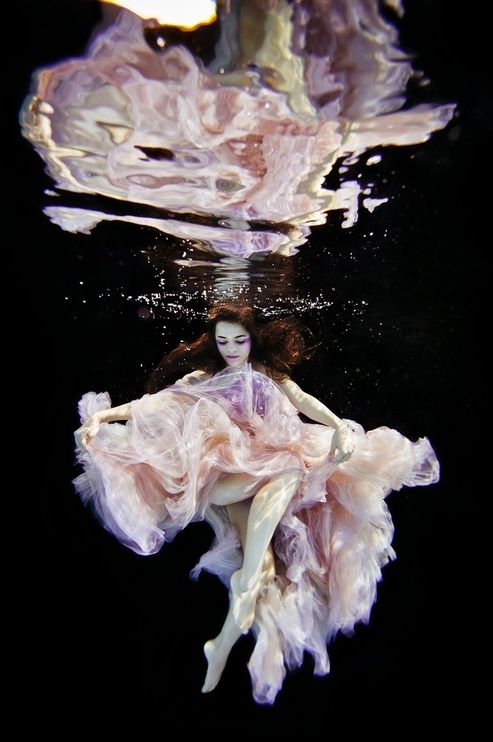
Le Fate dell'Acqua - Parte I


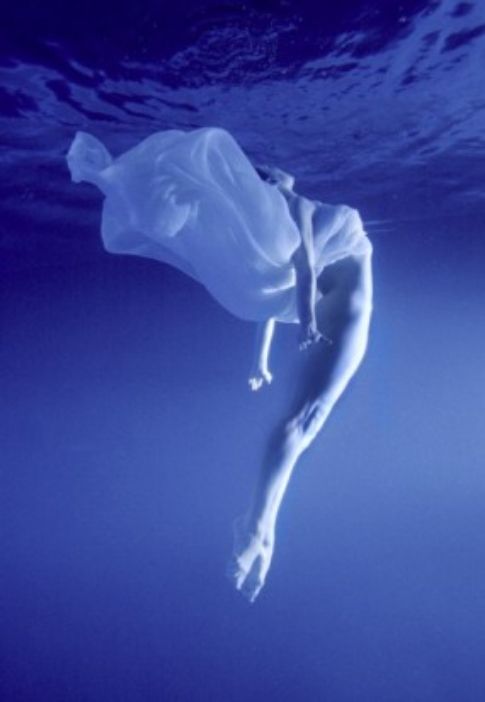
L'acqua e' elemento di rigenerazione e purificazione, e molti miti la vedono come protagonista dell'origine della vita.

L'acqua poteva anche guarire, e spesso era a lei e alle entita' che la rappresentavano che le popolazioni antiche si rivolgevano per ottenere la grazia della guarigione e, nonostante la nuova religione abbia piu' volte combattuto i culti dell'acqua, la devozione popolare ha sempre continuato ad attribuire un valore sacro a tale elemento.


Le fate che rappresentano quest' elemento vivono tra le acque dei fiumi e delle sorgenti, in limpidi laghi e nelle profondita' dei mari donando gioia agli umani con canti ammaliatori e seducenti danze.


Continua su: http://inovemondi.forumfree.it/?t=65726657

Le Fate dell'Acqua - Parte II: http://inovemondi.forumfree.it/?t=65726687

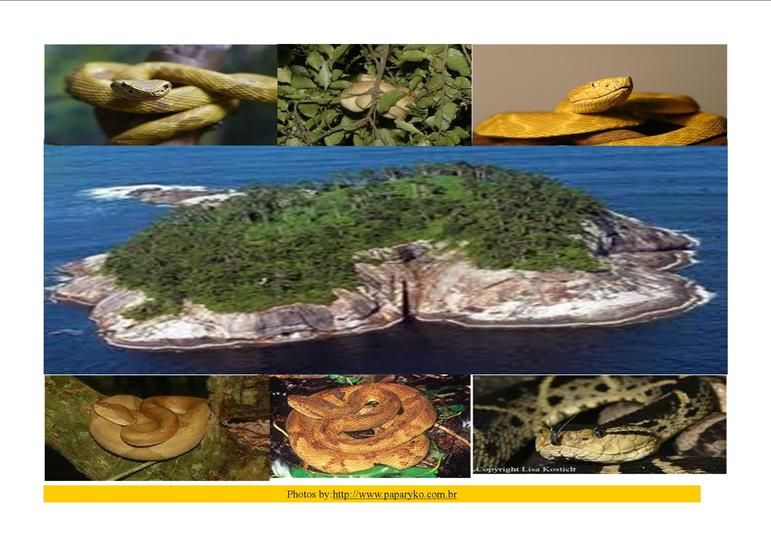
Snake Island - Ilha de Queimada Grande


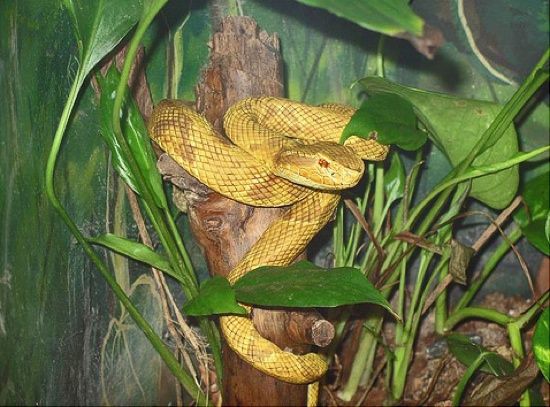
Off the shore of Brazil, almost 93 miles away from São Paulo downtown, is Ilha de Queimada Grande. The island is untouched by human developers, and for very good reason. Researchers estimate that on the island live between one and five snakes per square meter. The snakes live on the many migratory birds (enough to keep the snake density remarkably high) that use the island as a resting point.


Read more: http://inovemondi.forumfree.it/?t=67210238

L'Isola dei Serpenti, Ilha de Queimada Grande - Brasile


Chi ha paura dei serpenti? Io, per esempio. Ed è per qusto motivo che non andrò mai a Ilha de Queimada Grande.
Ogni isola ha la sua fauna caratteristica, ma quella di quest'isola brasiliana è tutto ciò da cui la maggior parte delle persone vorrebbe tenersi alla larga: serpenti, serpenti, e ancora serpenti.
Ilha de Queimada Grande è infatti la casa di una delle specie di serpenti più velenosa del mondo, il Golden Lancehead (Bothrops insularis), un tipo di fer-de-lance estremamente aggressivo e velenoso. Giusto per dare un'idea della pericolosità dei fer-de-lance, da soli provocano circa il 90% dei morsi letali di serpenti in Brasile.


Continua su: http://inovemondi.forumfree.it/?t=67210086


Crabs of Christmas Island - Australia


The red crab exhibits one of the most spectacular migrations on earth, despite man made obstacles.
It wasn't until a few years after the 1903 extinction of the predatory endemic species, the Maclear's Rat, that the people of Christmas Island started to experience what has developed into a yearly phenomenon of great awe and inconvenience – being directly in the migration path of millions of red crabs. Who is more inconvenienced, the islanders or the crabs, is hard to say. Either way, for the amount of time it takes for the army of decapods to march to their mating grounds, the island belongs to them.


Read more: http://inovemondi.forumfree.it/?t=67226938


La strana migrazione dei granchi a Christmas Island - Australia


Christmas Island è una piccola isola nell' Oceano Indiano a circa 360 chilometri da Jakarta. Con una popolazione di 1400 residenti distribuiti in circa cinque insediamenti nella regione settentrionale dell'isola, non pare essere un posto di particolare importanza.

In realtà, Christmas Island è un vero e proprio paradiso per la scienza. L'isolamento geografico e il fatto che l'uomo si sia stabilito sull'isola relativamente tardi (verso la fine del 1800), ha contribuito a preservare flora e fauna uniche al mondo, di estremo interesse per i naturalisti.


Continua su: http://inovemondi.forumfree.it/?t=67224492

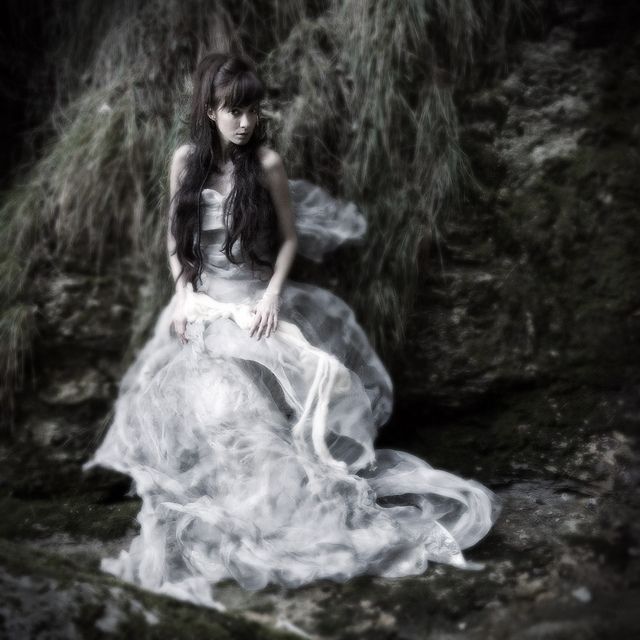
The Anguane Legends


The ‘anguane’, on the contrary, are mythical female figures resembling witches, sometimes with nails instead of hair, who are said to inhabit rivers, caves and other holes; most times they act as a primeval sort of 'water Goddesses', but often they also keep guard to caves, as openings on to the otherworld.


Read more: http://inovemondi.forumfree.it/?t=67224492

Le leggende delle Anguane, le mistiche creature dell'acqua


Le Anguane in origine dee Aquane, signore delle acque, protettrici della vita e foriere di fertilità, sono creature leggendarie del panorama mitologico alpino e campestre e sono legate in maniera naturale all’elemento che dona la vita, l’acqua, infatti si pensa che il loro nome derivi proprio da questa parola.


Continua su: http://inovemondi.forumfree.it/?t=67022395

Friday, November 29, 2013

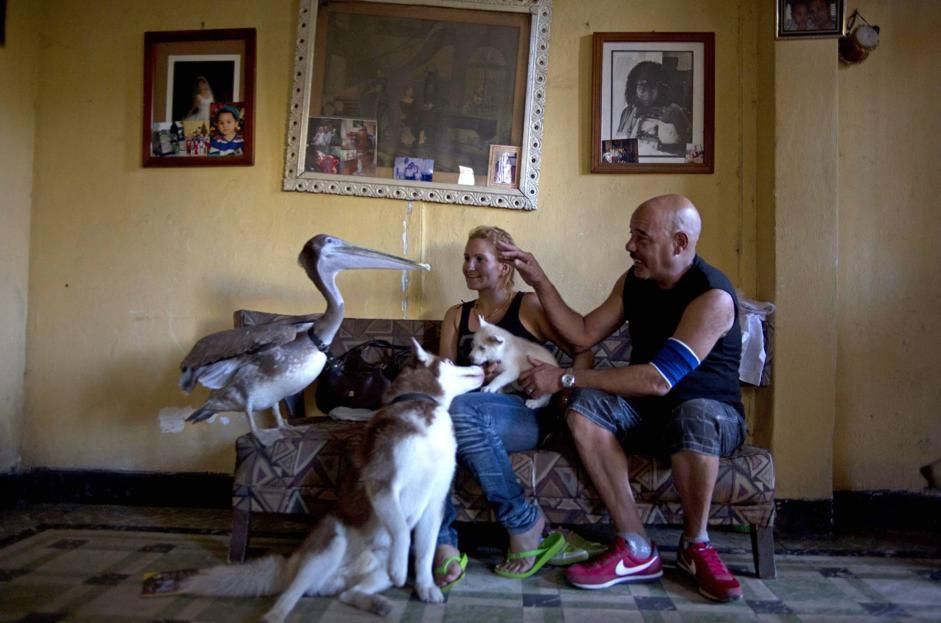
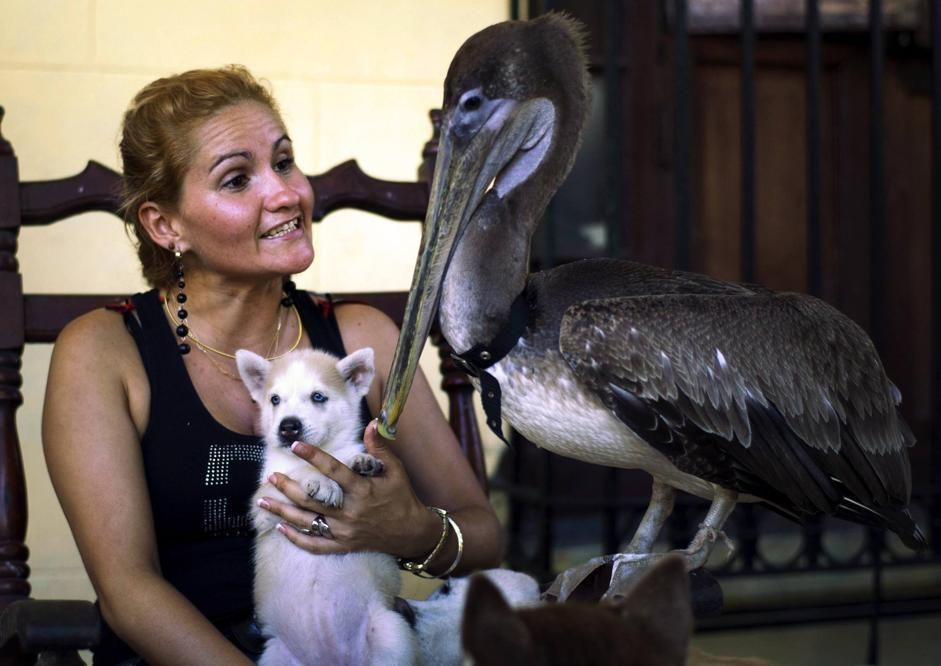
Pancho the Pelican an urban celebrity in Havana


HAVANA—Pancho the Pelican apparently prefers the company of humans to his own kind, and the grit of the big city to a life spent soaring through the breeze above the Caribbean Sea.

The wayward seabird has become the toast of 23rd Street, a bustling Havana thoroughfare where the 2-foot-tall Pancho waddles down the sidewalk, wings spread and beak agape, as delighted children point and smoky 1950s Chevrolets rumble past.


Read more: http://inovemondi.forumfree.it/?t=67613800


Pancho, il pellicano che vive in famiglia - Avana


All’Avana un pellicano (Pelecanus occidentalis occidentalis) di nome Pancho è una star nel suo quartiere intorno alla 23esima strada. I vicini lo conoscono e lo salutano. E lui esce di casa e cammina sul marciapiede come se fosse una persona.

Senza nessuna paura di passanti e automobili in strada. Nella famiglia che lo ha adottato si sente quasi un figlio: di rado si allontana dalla mamma umana, Magela Guerrero di 32 anni, madre di un 13enne. Anzi, attacca chi cerca di avvicinarsi troppo alla donna.


Continua su: http://inovemondi.forumfree.it/?t=67613755


Baba Vanga - Vangelia Gushterova


Vangelia Pandeva Dimitrova, also known as Baba Vanga, also know as Vangelia Gushterova - her married name, is one of the lesser-known prophets in Western Culture. Prematurely born October 3, 1911 and dying August 11, 1996, she grew to be one of the great prophets of the European countries. She was born in Bulgaria - Ottoman Empire, Yugoslavia, Macedonia or whatever it was and is if you want to get technical - and she spent most of her life living in a small village in the Kozhuh Mountains.
As the story goes, at the age of 12, the young Vangelia was lifted by the wind in a storm and thrown to the ground. She was found with sand and dirt in her eyes and she eventually became blind. Her gift of foresight soon began to show afterwards.


Read more: http://inovemondi.forumfree.it/?t=67613712


Baba Vanga


Vangelia Pandeva Dimitrova, nota anche come Baba Vanga, noto anche come Vangelia Gushterova - il suo nome da sposata, è una dei profeti meno noti nella cultura occidentale. Nati prematuramente il 3 ottobre 1911 e morta l'11 Agosto 1996, è cresciuta ed è diventata una dei più grandi profeti dei Paesi Europei. E 'nata in Bulgaria - l'Impero Ottomano, Jugoslavia, Macedonia o quello che era ed è, se si desidera essere precisi - e ha trascorso la maggior parte della sua vita in un piccolo villaggio nelle montagne Kozhuh.

Secondo la storia, all'età di 12 anni, la giovane Vangelia fu presa dal vento in una forte tempesta, che la sollevò e poi scagliò a terra violentemente. I familiari la trovarono con tanta sabbia e sporco negli occhi, e proprio a causa di questo Vanga divenne completamente cieca. Il suo dono della preveggenza presto cominciò a mostrarsi in seguito a questa vicenda.

Continua su: http://inovemondi.forumfree.it/?t=67613703

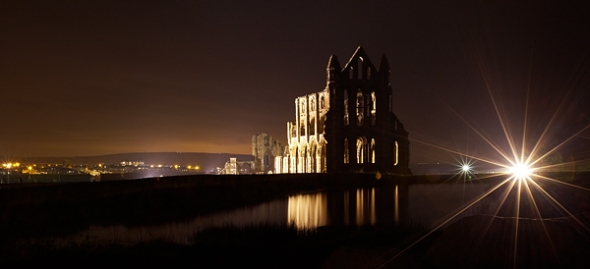
Whitby Ghosts and…Dracula


Whitby Abbey


Whitby is a busy town, and its population grows hugely during the summer months when the tourists arrive. However, it also boasts an altogether different type of resident; one that walks the streets and old buildings at night putting fear into the hearts of those unlucky enough to see them. For Whitby is a haunted place, and is home to many ghosts, apparitions and old folktales.


Read more: http://inovemondi.forumfree.it/?t=67227205


Gli spiriti di Whitby e…Dracula


Whitby Abbey


Whitby è una città indaffarata, e la sua popolazione cresce enormemente durante i mesi estivi, quando i turisti arrivano. Tuttavia, vanta anche un tipo completamente diverso di residenti; uno che cammina per le strade e gli antichi edifici di notte mettono paura nei cuori di chi ha la sfortuna di veder loro. Per Whitby è segno di luogo infestato , ed è sede di molti fantasmi , apparizioni e vecchi racconti popolari .


Thursday, November 28, 2013

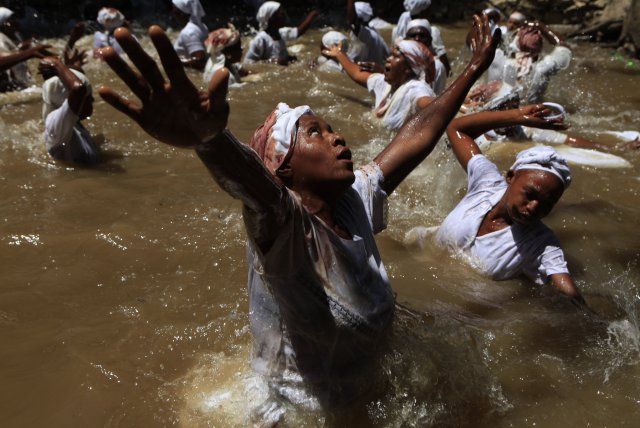
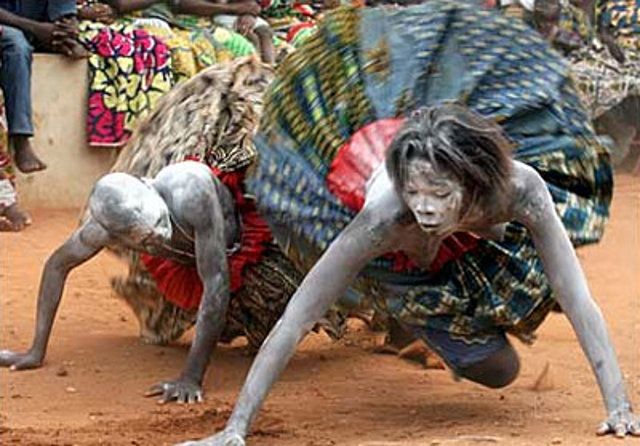
Voodoo


Voodoo is a derivative of the world’s oldest known religions which have been around in Africa since the beginning of human civilization. Some conservative estimates these civilizations and religions to be over 10 000 years old. This then identify Voodoo as probably the best example of African syncretism in the Americas . Although its essential wisdom originated in different parts of Africa long before the Europeans started the slave trade, the structure of Voodoo, as we know it today, was born in Haiti during the European colonization of Hispaniola .


Read More : http://inovemondi.forumfree.it/?t=67399342

Il Voodoo


Il Vodun, conosciuto anche come Voodoo oppure Hoodoo, ebbe origine e venne inizialmente praticato negli ambienti caraibici dell’isola di Haiti. I fondamenti del Vodun sono le religioni Yoruba dell’Africa Occidentale, portate ad Haiti da schiavi Africani deportati dalla medesima zona. Il termine Vodun deriva da Vodu, che significa “spirito” o “divinità” nell’antico linguaggio dei Dahomey.


Continua su : http://inovemondi.forumfree.it/?t=67399196#lastpost


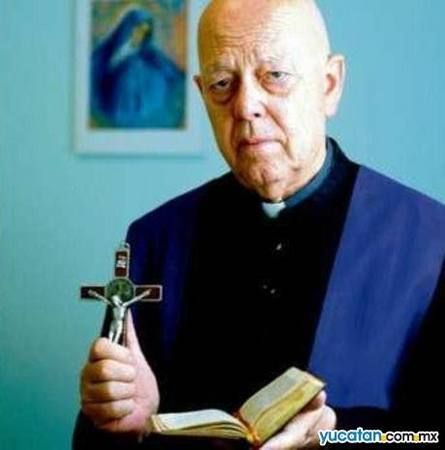
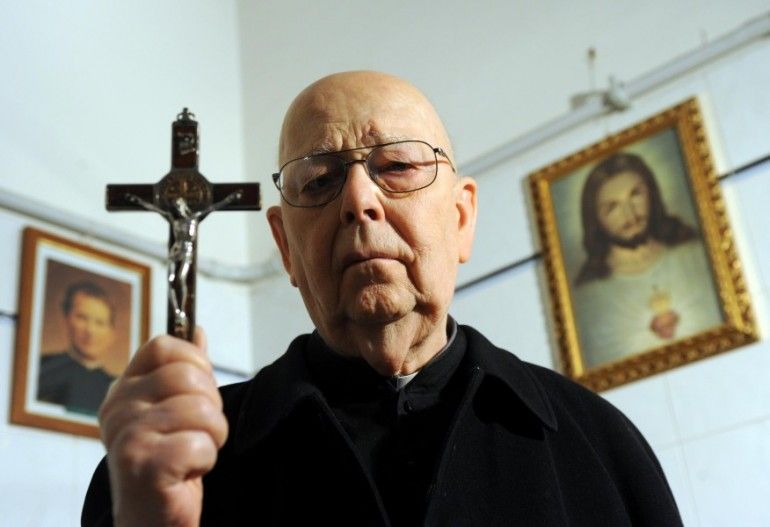
Father Amorth – Exorcist


Gabriele Amorth (born 1 May 1925) is an Italian Roman Catholic priest and an exorcist of the Diocese of Rome who is reputed to have cleansed tens of thousands of demonic possessions.

Amorth was born in Modena, Emilia. He was ordained a Roman Catholic priest in 1954 and became an official exorcist in June 1986, under the tutelage of Candido Amantini.
He is a member of the Society of St. Paul, the congregation founded by James Alberione in 1914. In 1990, he founded the International Association of Exorcists and was president until he retired, at 75, in 2000. He is now honorary president for life of the association.


Read More : http://inovemondi.forumfree.it/?t=67399553

Padre Amorth – Esorcista


Gabriele Amorth (Modena, 1º maggio 1925) è un presbitero e scrittore italiano, esorcista della diocesi di Roma.

« Io paura di Satana? È lui che deve avere paura di me: io opero in nome del Signore del mondo. E lui è solo la scimmia di Dio. » “Gabriele Amorth”

Nato a Modena da una famiglia religiosa legata all’Azione Cattolica, fu membro della FUCI. A soli 18 anni entrò nei partigiani cattolici della Brigata Italia col soprannome “Alberto” e divenne presto vice comandante di piazza a Modena e comandante del 3º Battaglione della 2°Bgt Italia.


Continua su : http://inovemondi.forumfree.it/?t=67399515

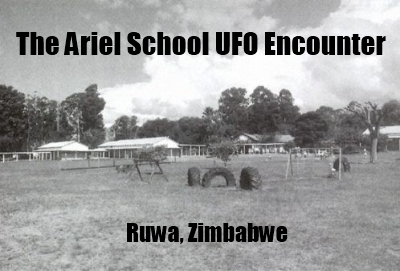
The Ariel School UFO Encounter - 1994 Ruwa, Zimbabwe


A few of the schoolchildren who witnessed the encounter


Preamble: On 14th September, 1994, a UFO streaked across the sky over Southern Africa. Two days later, something landed in a schoolyard in Ruwa, Zimbabwe, with three or four 'things' beside it. This was witnessed by 62 schoolchildren, who had little or no exposure to TV or popular press accounts of UFOs. The children were interviewed the day after the encounter.

Incident: On Friday 16th September, at approximately 10:15, 62 children from Ariel School, a private primary school in Ruwa (about 20 km from Harare) were in their playing field for the mid-morning break. Suddenly, they saw three silver balls in the sky over the school. These disappeared with a flash of light and then reappeared elsewhere. This happened three times and then they started to move down towards the school with one of them landing (or hovering) over a section of rough ground made up of trees, thorn bushes, and some brown-grey cut grass with bamboo shoots sticking up out of the ground. The children are not allowed in this area although it is adjacent to their playing field and is not fenced off, because of snakes, spiders and perhaps other harmful creatures. One can soon disappear from view while walking here, and there is only one very rough track used by tractors in an attempt to clear this area.


Incontri ravvicinati nel cortile della scuola con 60 bambini - Anno 1994, Zimbabwe


Correva l'anno 1994 e il 16 Settembre accadde un fatto che ancora ad oggi risentirlo fa venire la pelle d'oca: 60 alunni della scuola "Ariel" di Ruwa, in Zimbabwe, videro con il loro occhi una grossa navicella aliena, accompagnata da altre, atterrare nel cortile della loro scuola ed incontrarono gli occupanti. Numerose segnalazioni di UFO nel cielo del Sud Africa vennero riportate proprio due giorni prima. E' uno tra i casi più eccezionali dell'Ufologia moderna e merita di essere ricordato.

Di seguito, il report della antropologa e ricercatrice Dominique Callimanopulos che assieme al dottor John Mack - psichiatra ad Harvard che studiò il fenomeno delle Abdcution (scomparso in circostanze sospette nel 2004), si recò sul posto per raccogliere le testimonianze dei bambini.


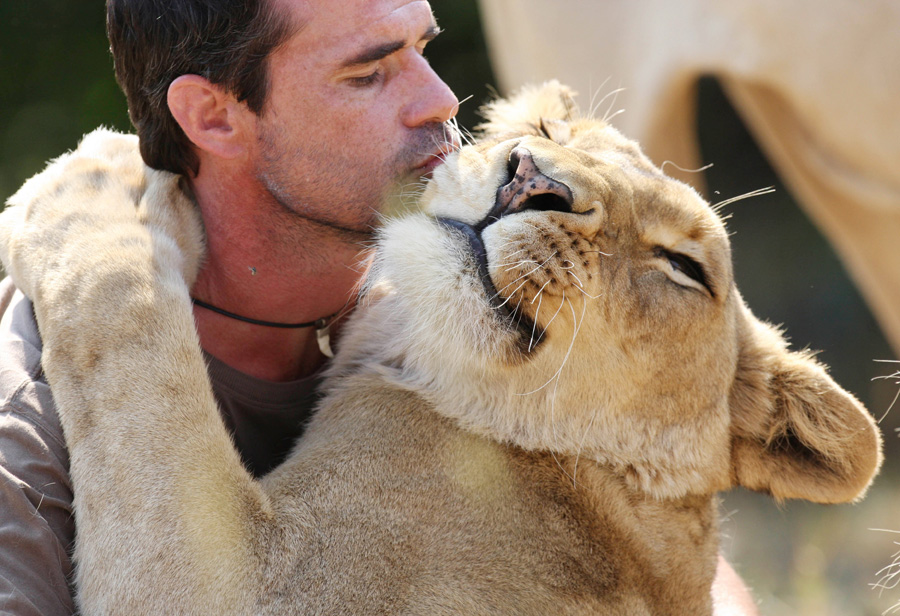
Meet Kevin Richardson: The Lion Whisperer


Zoologist and self-taught animal behaviorist Kevin Richardson, aka "The Lion Whisperer," has a unique relationship with animals that has been cultivated over years of caring for large predators like lions.

His affinity for animals began at an early age with smaller creatures he kept as pets, including crickets and a toad named "Paddajie."

Eventually Richardson's fascination with wildlife grew to a degree that led him to break the rules of safety and get in close with carnivorous wildlife.
Richardson's bond with animals leaves most questioning their tactics. His biography explains: "He does not use the common methods of breaking the animal’s spirit with sticks and chains, instead he uses love, understanding and trust.


La mia vita con i leoni


Gira con iene selvagge in braccio, va a passeggio con i leopardi, mangia-dorme-gioca con i leoni. Si chiama Kevin Richardson, faceva il fisioterapista, ha mollato tutto, è andato in Africa, ed ora è il naturalista (sul campo) più "bestiale" che ci sia. Siete pronti a partire? Nella riserva di Kevin aspettano volontari!
«Se mi uccidessero, perché è qualcosa che potrebbe succedere, beh..È una di quelle cose, niente di cui ci si debba preoccupare». Parole di Kevin Richardson, il miglior amico delle bestie selvagge, che gira con in braccio una iena, che bacia leoni, si rotola con loro, va a fare il bagno con l'amica leonessa che gli si stringe al collo.


Friday, November 22, 2013

USA - Torture his dog wounds, burns and broken bones Master sentenced to 55 years in prison


They found him dying. Cowgirl on a sidewalk in Quincy in the United States. The vet who rescue could not believe his eyes: deep wounds, bruises, cuts, burns and several broken bones.

On that poor battered body the frightening signs of the fury of a madman, sadistic murderess. Irreversible damage and suffering a strong forced the doctor to put him to sleep forever.

Elsewhere, the thing would probably be the end. But the story of Quincy had another outcome: the torturer was sentenced to 55 years in prison: five years for each of the 11 counts indictment. Man arrested by the police is called Radoslaw Czerkawsky, undocumented Polish immigrant who worked taking care of an elderly of his own nationality.


Condannato a 55 anni per aver torturato il suo cane - USA


Sentenza storica negli Stati Uniti

31 agosto 2013, Quincy, Massachusetts. Radoslaw Czerkawsky, immigrato polacco, abbandona Doe, un cucciolo di pitbull, sul ciglio della strada in stato agonizzante. L’uomo, prima di liberarsene, l’ha torturato: l’ha preso a pugni fino a rompergli le ossa e gli ha provocato ustioni in molte parti del corpo. Doe purtroppo non ce l’ha fatta, le sue ferite erano troppo gravi e il veterinario che l’ha soccorso ha deciso di interrompere le sue sofferenze con l’eutanasia.

Ma, per una volta, la giustizia ha fatto il suo corso: l’autore di questo abominevole gesto è accusato di 11 capi accusa, per ognuno dei quali rischia 5 anni. Totale: 55 anni di carcere.


Continua su : http://inovemondi.forumfree.it/?t=67568790


Thursday, November 21, 2013

A Lopburi per il banchetto delle scimmie


In Thailandia nella città dei macachi. Il 24 novembre c'è un ricco buffet tutto per loro. Allestito nel cortile di un antico tempio khmer.
Lopburi, in Thailandia, è la città delle scimmie. Sono dappertutto: per strada, sui pali della luce e sui semafori, arrivano sui balconi delle abitazioni, attraversano le strade, si aggirano sui tetti delle case e occupano le auto parcheggiate. Sono così tante da essere diventate la maggior attrazione turistica di Lopburi, nonostante in questa città, a 250 km dalla capitale Bangkok, ci siano splendide rovine khmer.


Lopburi Monkey Buffet


Overview of the Festival

An unusual religious festival in Thailand takes place every November 25th in Lopburi. A huge all-you-can-eat buffet is prepared at the Pra Prang Sam Yot and fed to more than 2,000 monkeys. In Thailand, monkeys are a sacred animal often deemed to be gods, so the Lopburi Monkey Buffet Festival is held to pay tribute to these wonderful animals.


Read more: http://inovemondi.forumfree.it/?t=67538475

Saturday, November 09, 2013

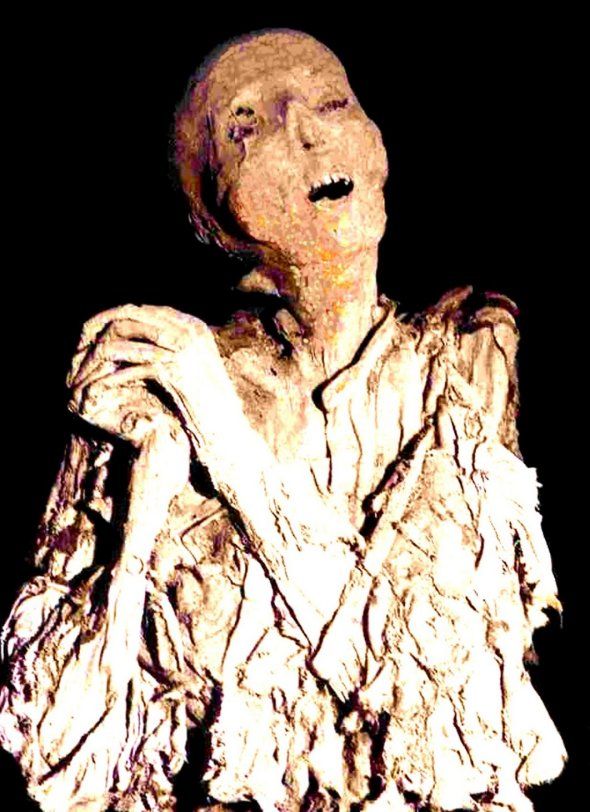
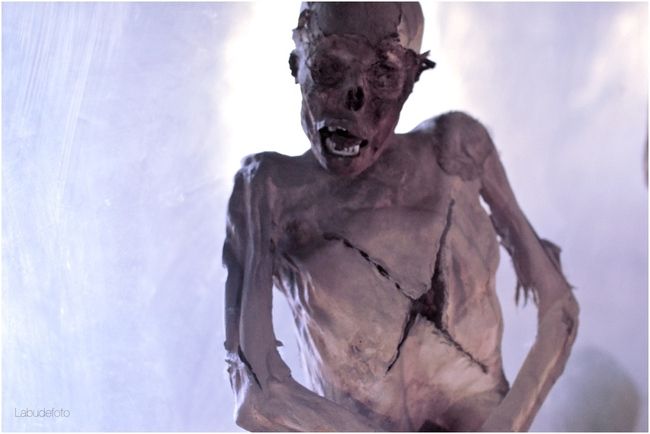
The Mummies of Ferentillo - Umbria, Italy


The tiny town of Ferentillo in southern Umbria holds an interesting surprise below the Church of Santo Stefano. Bodies buried there were preserved by a rare microfungus that attacked the corpses and turned them into mummies.


Read more: http://inovemondi.forumfree.it/?t=67468186

Le Mummie di Ferentillo - Umbria


In un piccolo comune della Valnerina chiamato Ferentillo è possibile visitare un museo davvero molto particolare. Si tratta del Museo delle Mummie. Nessuna benda, nessun sarcofago, nessun tesoro, le mummie di Ferentillo non sono certo paragonabili a quelle dei musei egizi.

Nella cripta dell’antica chiesa di Santo Stefano sono infatti conservati in diverse teche, i corpi dei defunti che dal 1500 all’inizio del XIX secolo, furono sepolti tra le mura della piccola cittadina in provincia di Terni.


X Factor 7 - 3° Live - Mika & Chiara, il commento di Chiara


Continua su - Read More : http://inovemondi.forumfree.it/?t=67463911